A spectrum is a reduction, not an atmosphere
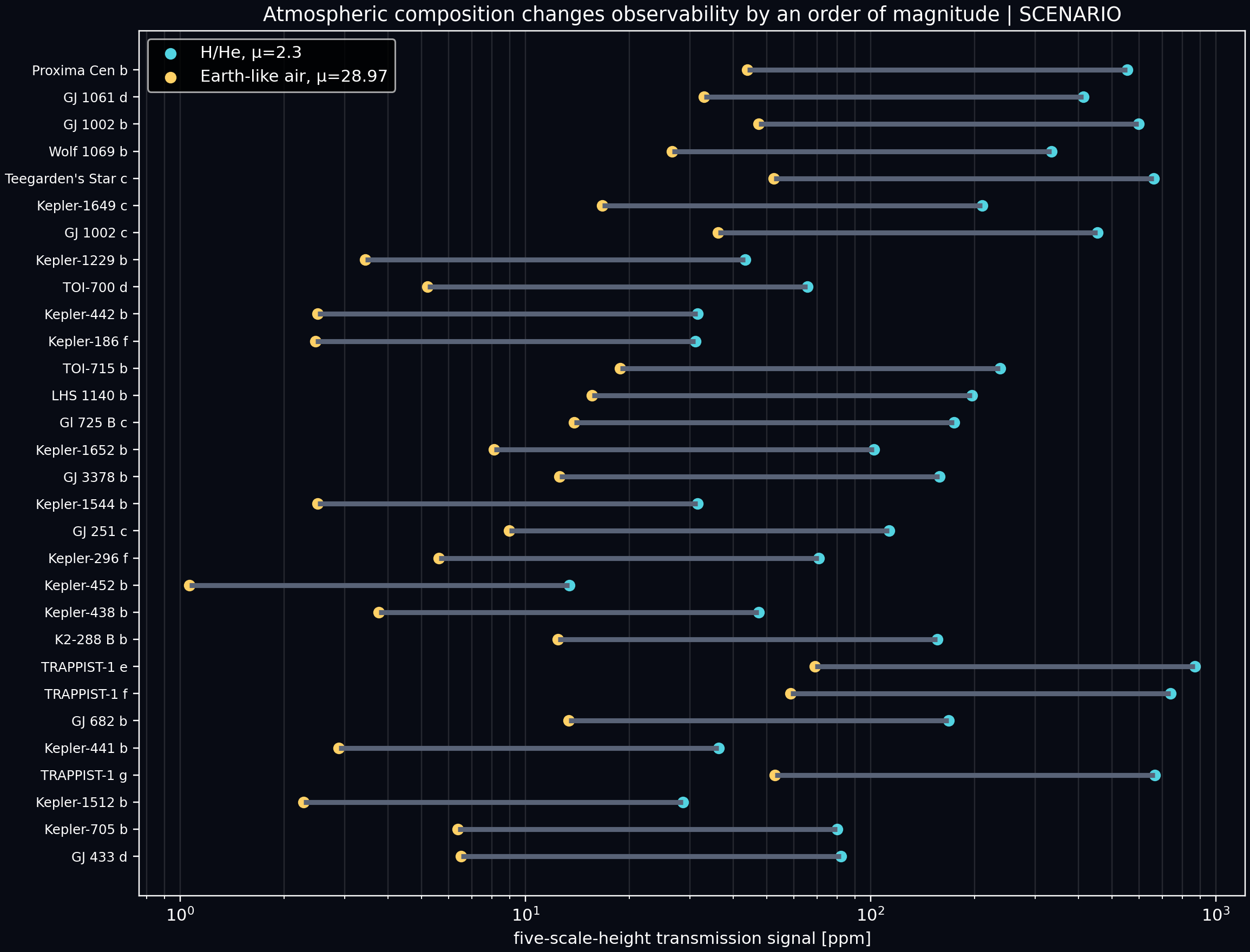
Published wavelength-dependent measurements remain attached to their facility, instrument, reference and reduction path. Clear-atmosphere scale heights are shown as scenarios and never mistaken for molecular detections.
Transmission + eclipse archives · reduction-preserving architecture · scenario calculator
8,309
spectral points
published archive measurements
5,948
transmission
measurement rows
2,361
eclipse
measurement rows
1,826
separate reductions
never silently merged
What the analysis found
Different reductions are evidence about uncertainty
When two teams reduce the same target differently, the disagreement is scientifically useful. The pipeline stores each reduction independently and computes overlap diagnostics without selecting a winner or averaging incompatible products.
Open the real spectral measurements →Earth 2.0 spectrum screen
The strongest result is an evidence gap.
None of the 15 strict small-and-temperate candidates has an indexed published spectrum or tabulated wavelength measurement in the ingested archives.
15
strict candidates
0
indexed spectra
0
measured spectra
The next decisive step is target-specific atmospheric follow-up: obtain a calibrated spectrum, preserve each reduction separately, and test atmospheric models only after instrument and stellar systematics are quantified.
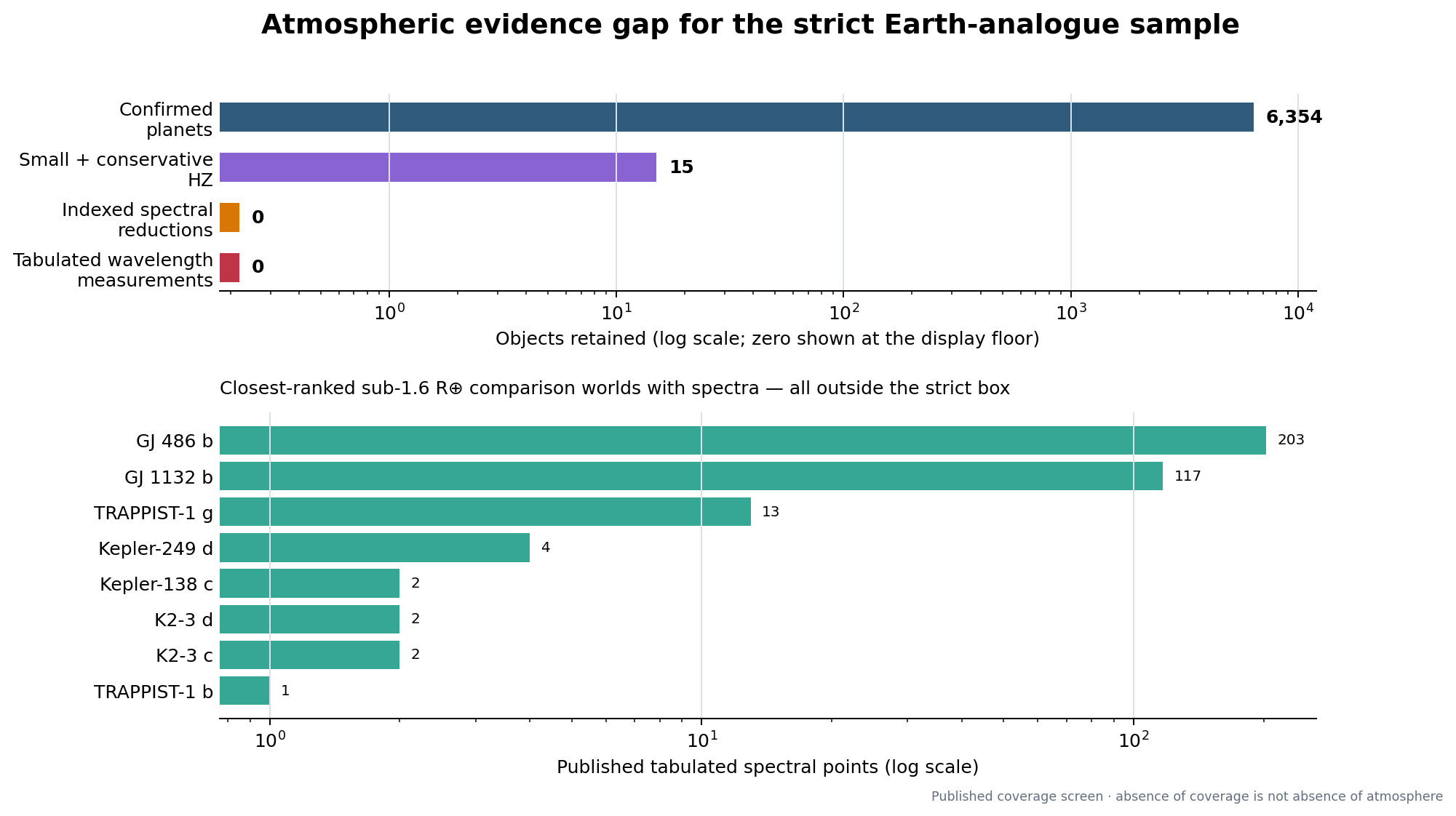
This cross-match measures published spectral coverage. It does not detect an atmosphere, identify a molecule, establish habitability, or provide evidence of life.