Master-Thesis-2024
Closed-Loop Feedback Control System for EXOhSPEC
MSc Astrophysics Thesis and Selected Instrumentation Development
University of Hertfordshire · 2024
Author: Biswajit Jana
Supervisors: Prof Hugh R. A. Jones and Prof Bill Martin
Research question
EXOhSPEC is a high-resolution spectrograph development platform for precision radial-velocity work. This project investigated how temperature, pressure and humidity affect optical path length (OPL) and detector-plane motion, and whether feedback control can reduce spectral-image drift.
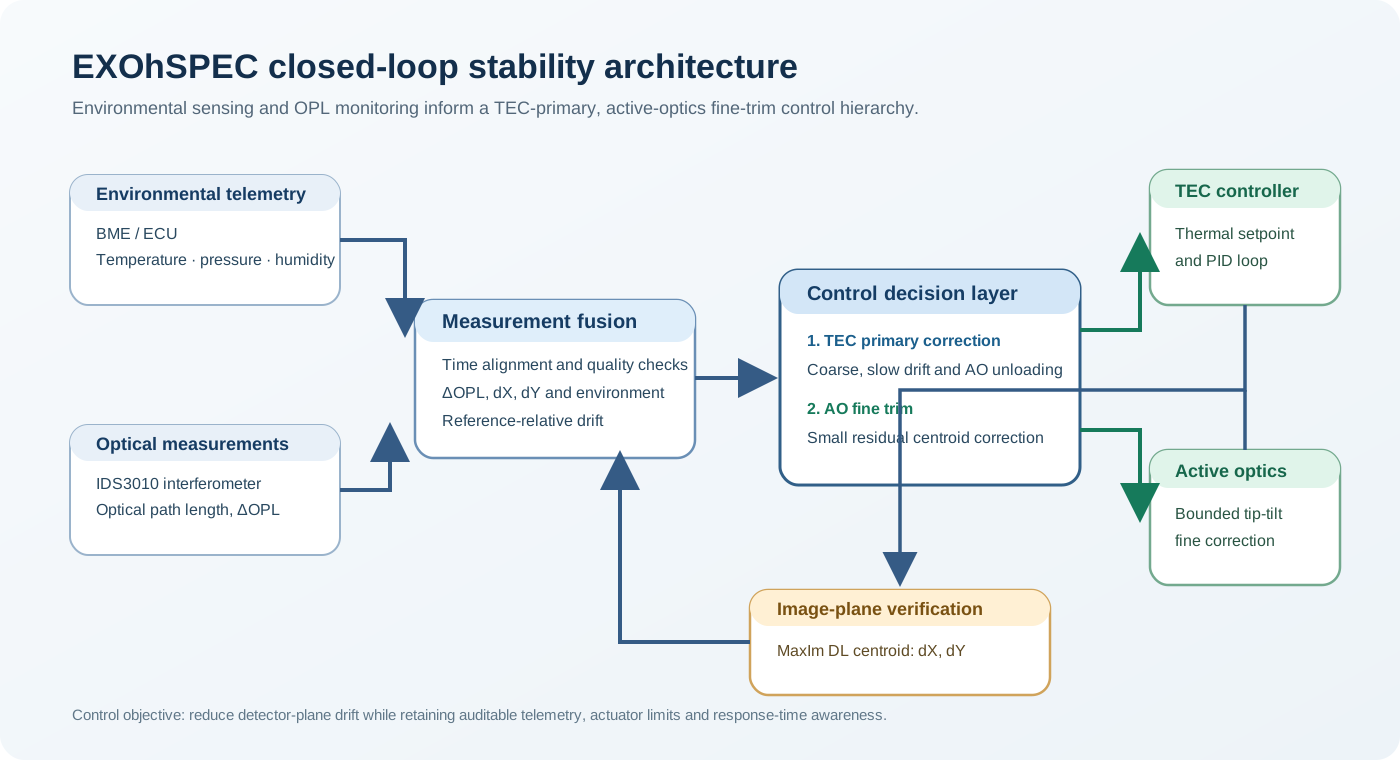
The experimental workflow combines environmental telemetry, IDS3010 interferometry, MaxIm DL centroid measurement, thermal control through a Meerstetter TEC controller, and bounded active-optics correction.
Feedback architecture
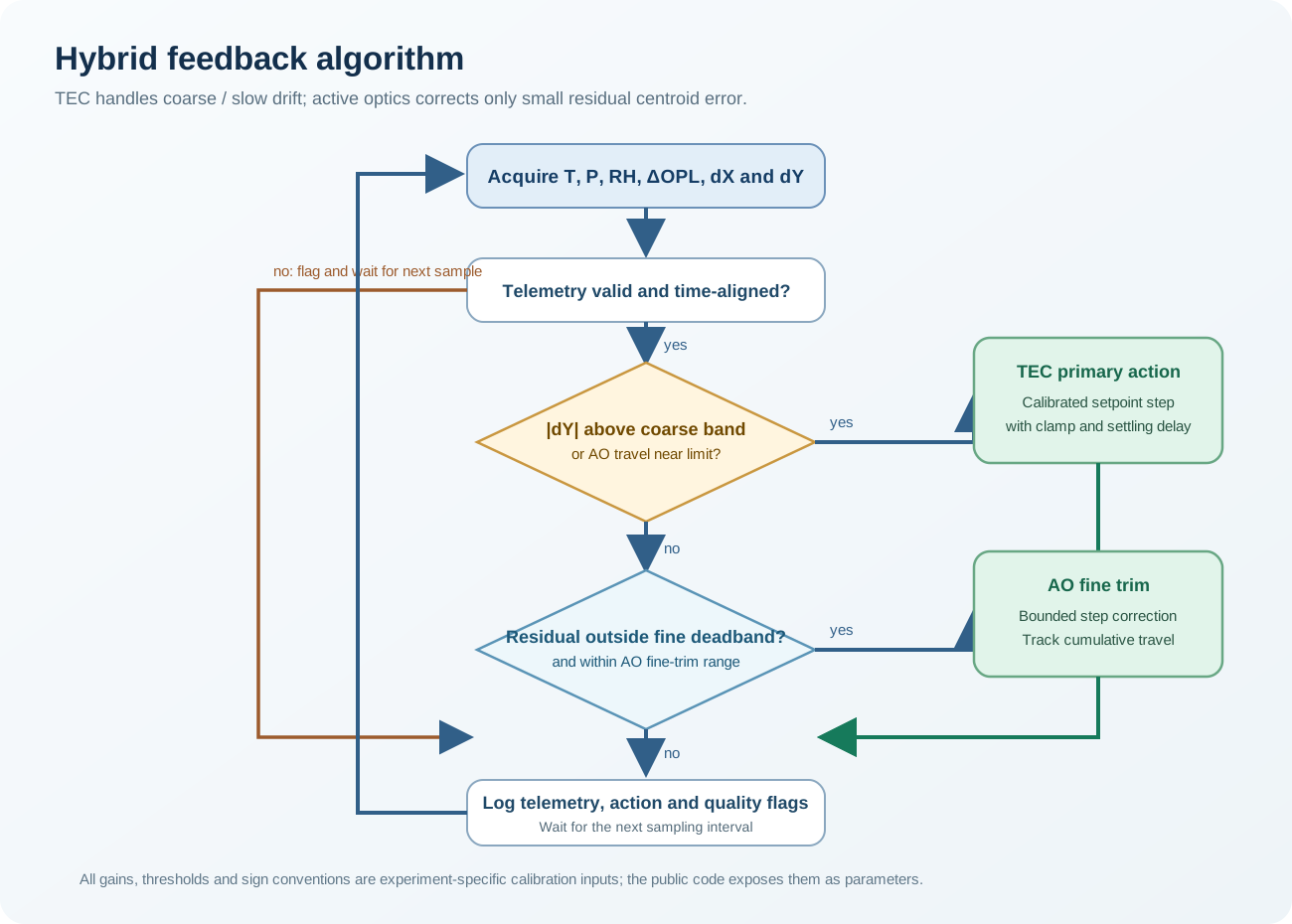
The control hierarchy is TEC-primary: thermal correction is used for coarse and slow drift, while active optics is used only for small residual image motion. Cumulative AO travel is monitored so that the thermal loop can absorb an offset before the fine actuator reaches its range limit.
The code-derived model, including the rolling OLS predictor, OPL feed-forward term, PI fallback, AO matrix inversion and reference-management rule, is documented in methods/V6B_HYBRID_CONTROLLER.md.
Controller lineage & evidence graph
An interactive 3D graph connecting every controller version (V11-V17), calibration dataset, diagnostic script and finding in this project, with the recorded RMS figures and open questions kept alongside it for reference.
Source: EXOhSPEC_Memory_Graph/exohspec_brain.html - a single self-contained HTML file, no external dependencies.
Component studies
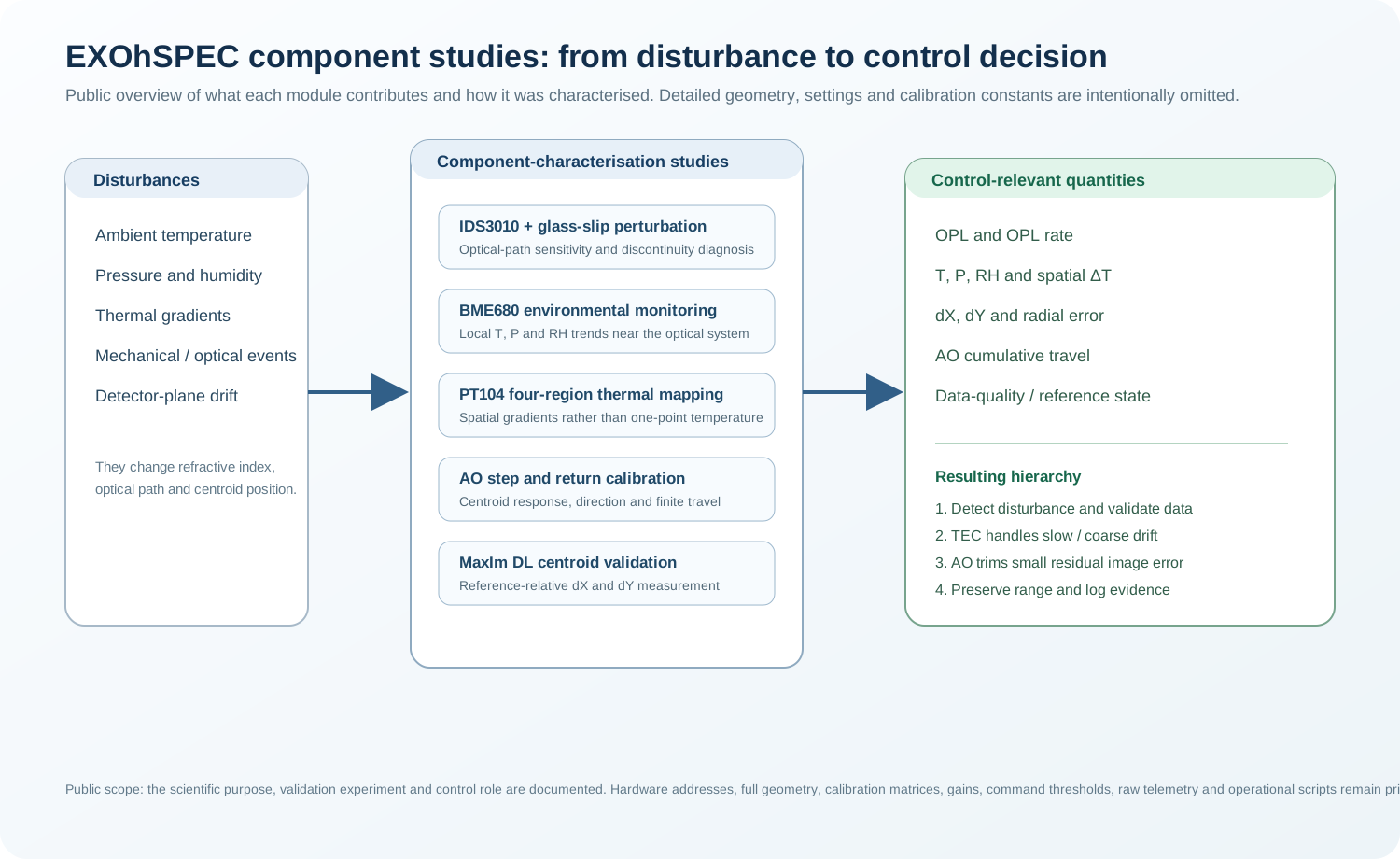
The components/ reports explain how the interferometer, BME680, PT104 four-region thermal mapping, TEC, active optics, MaxIm DL and Python workflow were characterised before or alongside hybrid feedback development. Each report includes the relevant experiment, compact equations and a public-safe boundary that keeps operational build details private.
Selected results
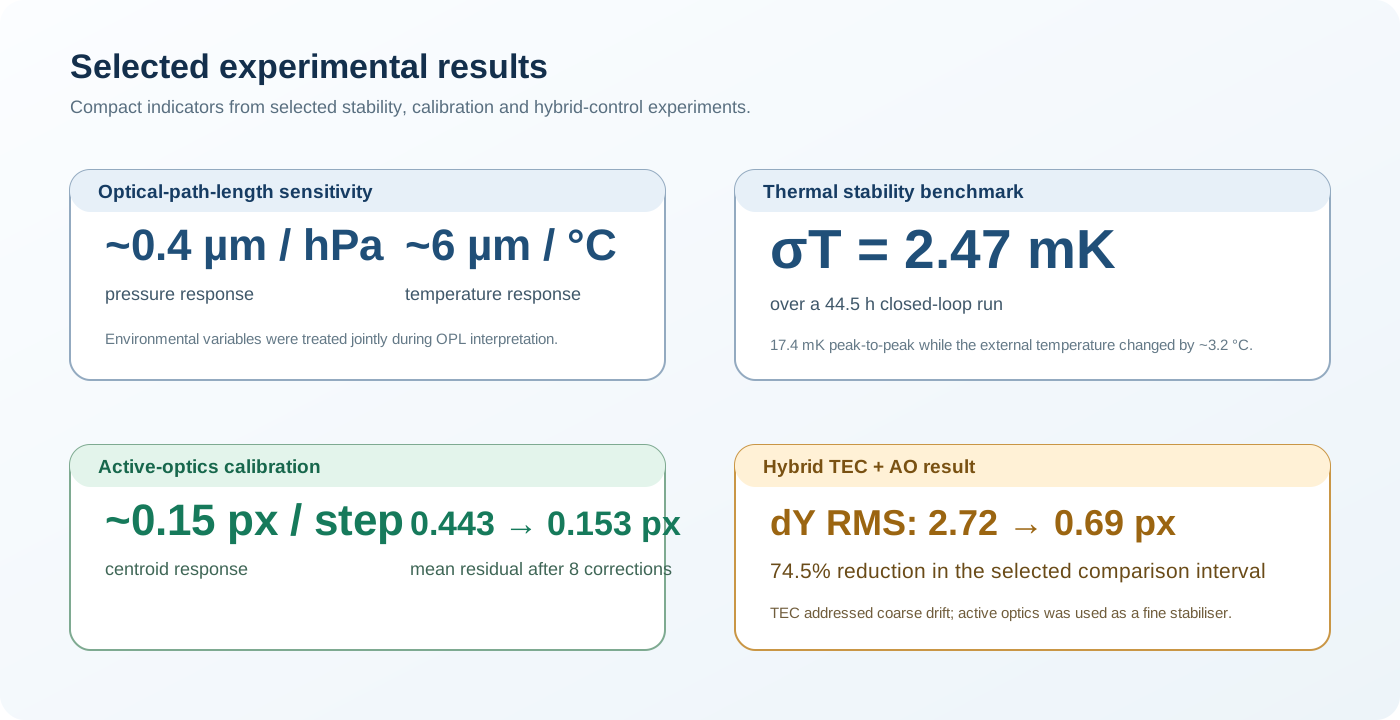
Selected experiments measured OPL sensitivity to environmental change, millikelvin-level TEC stability during a 44.5 h run, active-optics centroid response, and a hybrid-control comparison in which dY RMS decreased from 2.72 px to 0.69 px. See results/README.md.
Control interpretation
A perfectly flat dX = dY = 0 trace is not the appropriate baseline expectation for a delayed, continuously disturbed spectrograph. The current engineering question is how much time the system can remain inside a defined sub-pixel band while rejecting temperature, pressure, humidity and HVAC disturbances without exhausting AO range.
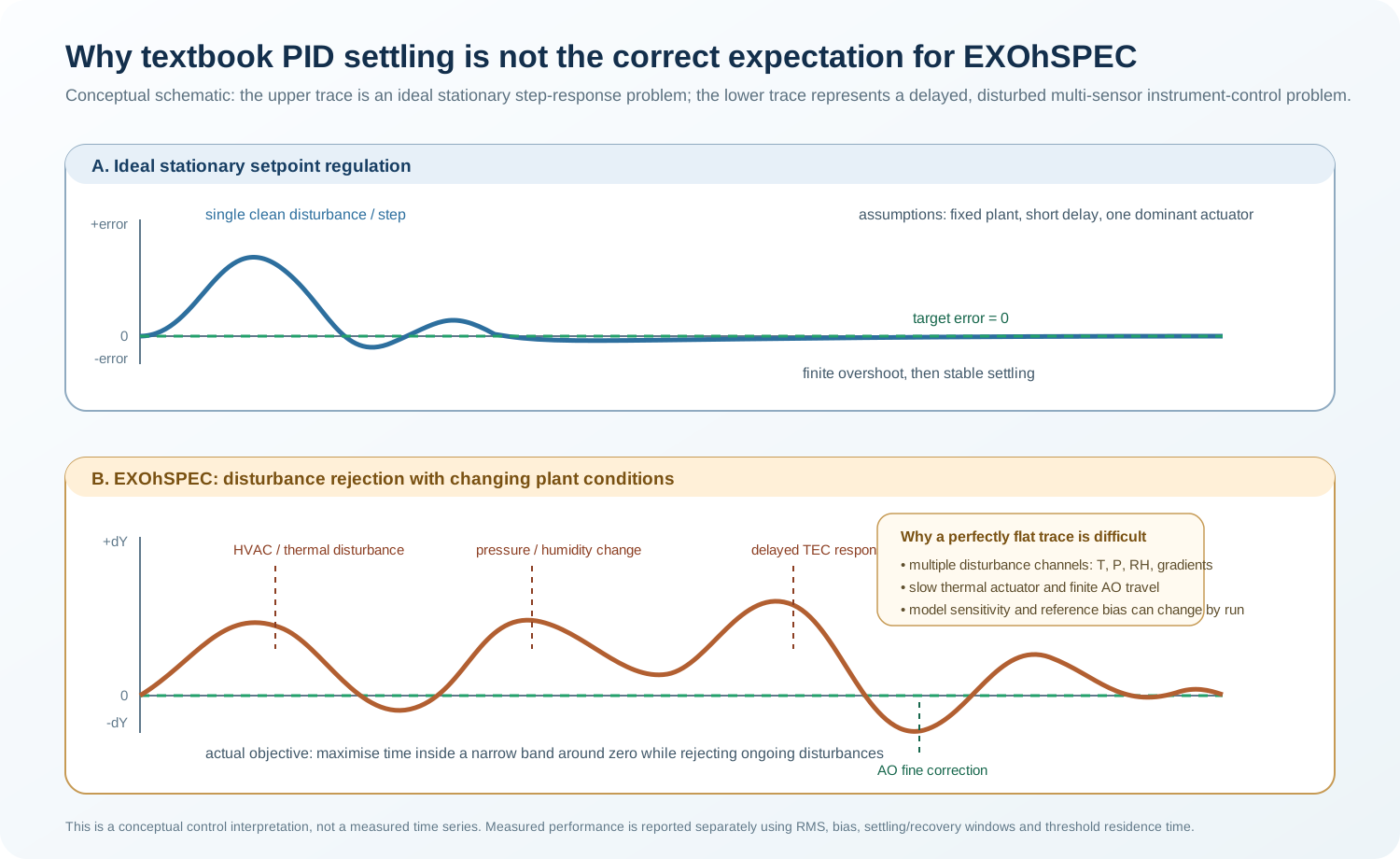
The full report, including the Stage-2 performance comparison and a quantitative explanation of the remaining control limitations, is available in results/why_zero_pixel_regulation_not_yet_achieved.md.
Current thermal-management development
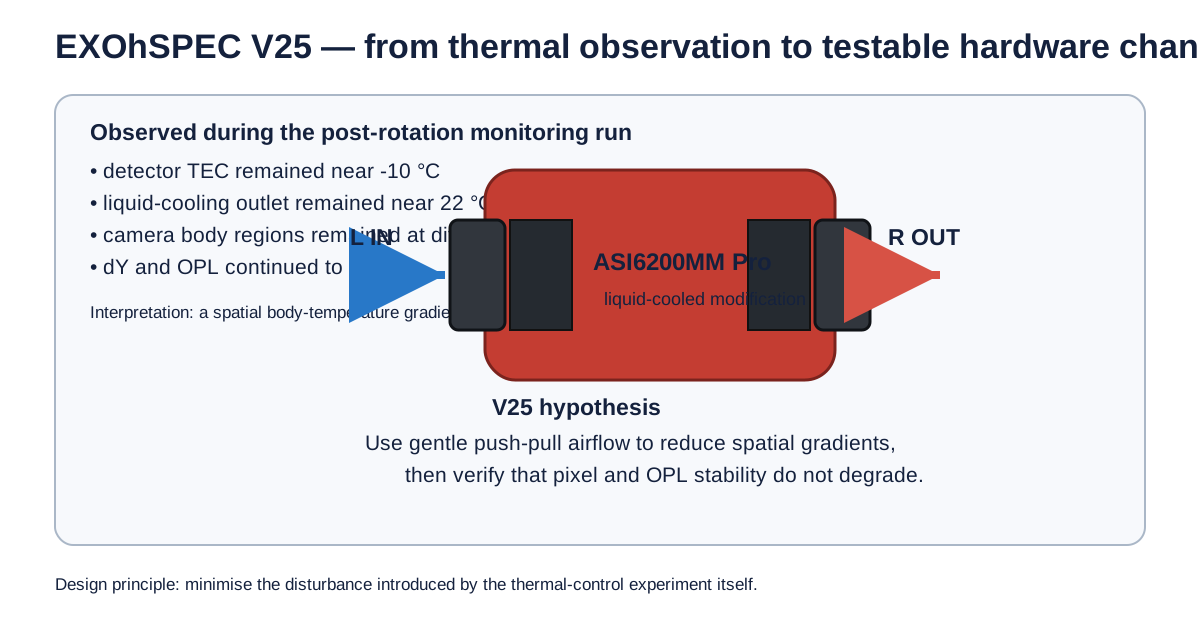
The latest instrumentation work extends the thermal-mapping programme to the camera body itself. A post-rotation monitoring run showed persistent spatial temperature differences across the camera while the detector TEC and liquid-cooling outlet remained stable, motivating a controlled forced-airflow experiment.
The resulting EXOhSPEC V25 camera thermal-homogenisation study documents the design of a compact dual side-vent fan mount, low-power fan selection, vibration-isolation strategy, editable parametric CAD and the staged thermal + pixel + OPL validation plan.
Code
tec_temperature_monitor.py- portable Meerstetter TEC temperature logger, adapted from the thesis development notebook.hybrid_feedback_model.py- hardware-independent TEC-primary / AO-fine-trim decision logic.drift_metrics.py- RMS, mean-absolute-error and threshold-fraction summaries for reference-relative centroid drift.
The public code exposes the method and its calibration inputs. Device ports, credentials, raw telemetry and laboratory configuration are not included.
Presentations
- State of Art: Radial Velocity Spectrograph
- Advancements in Precision: LASER Interferometer Control System
- Optimising Path Length Stability in Laser Interferometers using Air Refractive Index
- High-Resolution RV Spectrographs: ANDES and PID Loop Implementation in EXOhSPEC
Scope
This public repository contains selected methods, figures, code and MSc presentation material. The full working archive, raw data, laboratory configuration, detailed controller variants and unsubmitted material are kept separately.